Business ITAD Compliance for Companies of Every Size
Most businesses don’t realize they carry the same data liability as regulated industries the moment they store customer or employee information on a device.
Every Business Needs the Right ITAD Partner
Your company just upgraded 300 laptops across two offices. The new machines are deployed, everyone is productive, and the old ones are stacked on pallets in a back room waiting for “IT to deal with it.” Every one of those laptops still has data on it. Customer records, employee files, financial documents, login credentials, and proprietary business information.
Until you properly dispose of them, you are carrying a data liability that grows every day those devices sit untouched. That is what business ITAD exists to solve. It is not a nice to have. It is a core part of your data security posture, and choosing the wrong vendor or skipping the process entirely can cost your company far more than the equipment was ever worth.
Why Is Business ITAD a Bigger Risk Than Most Companies Realize?
Here is the thing most business leaders miss: you do not need to be in healthcare or government to face serious consequences for improper data disposal. The moment your company stores customer personal information, employee records, payment data, or any form of personally identifiable information on a device, you carry a data liability that follows that device until the data is verifiably destroyed. As of 2026, 19 states have comprehensive consumer privacy laws in effect, including California, Texas, Colorado, Virginia, and Connecticut, and enforcement is intensifying.
The CCPA alone carries penalties of $2,500 per negligent violation and $7,500 per intentional violation, per record. When a retired laptop holds thousands of customer records that were never properly wiped, those numbers add up fast. According to IBM’s 2025 Cost of a Data Breach Report, the global average cost of a data breach sits at $4.44 million, and for U.S. organizations specifically, that number jumps to $10.22 million. Improper IT asset disposal is one of the most preventable paths to those numbers.
What Exactly Are Business ITAD Services?
ITAD stands for IT Asset Disposition. In plain English, it is the process of retiring your old technology the right way. That means inventorying what you have, securely transporting it, wiping or physically destroying the data following NIST SP 800-88 Rev. 2 (the federal guideline that spells out exactly how to sanitize storage media so nobody can recover the data), documenting every step, and either remarketing the equipment for value recovery or recycling it responsibly.
Business ITAD services add a layer of accountability on top of that: chain of custody documentation, tamper evident packaging, certificates of sanitization tied to individual serial numbers, and downstream tracking so you know where your hardware ends up. A vendor that does not do those things is not a partner, it is a gamble.
What Regulations Apply to Your Business When You Dispose of Equipment?
This depends on your industry, your customers, and where you operate, but the short answer is: more than you probably think. If you do business in California, the CCPA and CPRA require you to delete consumer personal information upon request, and that obligation extends to data sitting on retired hardware. If you handle payment card data, PCI DSS requires secure destruction of cardholder data when it is no longer needed.
If you are publicly traded, SOX compliance demands controls around the integrity and disposal of financial records. If you operate in the EU or handle EU resident data, GDPR requires you to erase personal data when it is no longer necessary for its original purpose, and fines can reach 4% of global annual revenue. And even if none of those apply by name, 19 states now have comprehensive privacy laws with disposal provisions, and that number keeps climbing. The bottom line: business ITAD is not optional for any company that stores personal data on devices. You can review NIST’s sanitization guidance at the NIST Computer Security Resource Center.
What Does NIST 800-88 Rev. 2 Require for Data Destruction?
NIST Special Publication 800-88 Rev. 2, finalized in September 2025, is the current federal standard for media sanitization. Even if your company is not a government agency, NIST 800-88 is the benchmark that auditors, regulators, and courts use to define “reasonable” data destruction. The guideline defines three escalating sanitization categories: Clear, Purge, and Destroy. Clear uses logical techniques to overwrite data, suitable for lower sensitivity information.
Purge uses more advanced methods (including cryptographic erase) that make data infeasible to recover even with laboratory techniques. Destroy physically renders the media unusable through shredding, disintegration, or incineration. The 2025 revision shifted focus from one off wipe events to establishing a documented sanitization program, and it specifically addressed the fact that standard overwrite procedures do not adequately sanitize SSDs, NVMe drives, and embedded flash media. That last point is critical: if your company has been “wiping” solid state drives with the same process you used for spinning hard drives, the data may still be recoverable.
How Do You Choose a Business ITAD Vendor You Can Actually Trust?
Certifications are the starting point. At minimum, look for R2v3 (the current responsible recycling standard, not the outdated R2:2013), NAID AAA for data destruction, ISO 27001 for information security management, and ISO 14001 for environmental management. Those certifications mean the vendor has been independently audited and meets recognized standards for how they handle your equipment and data.
Then ask hard questions. Where does my equipment physically go after pickup? Who handles it at every step? Can you provide a certificate of sanitization for every individual drive, tied to its serial number? What is your downstream recycling process? Can I see a sample audit package? A trustworthy business ITAD vendor will answer all of that in writing. You can verify current certifications through the SERI R2 certified facility directory and the NAID AAA certified company directory.
So Do Most Businesses Really Carry the Same Data Liability as Regulated Industries?
Yes, and most do not realize it until something goes wrong. The moment your company stores a customer’s name, email, phone number, payment information, or Social Security number on a laptop, server, backup tape, or even a multifunction printer, you carry a data liability that does not disappear when the device comes out of service.
With 19 states enforcing comprehensive privacy laws, CCPA penalties reaching $7,500 per intentional violation per record, and U.S. data breaches averaging $10.22 million, the cost of ignoring business ITAD is no longer theoretical. The fix is straightforward. Know what assets you have. Wipe them properly using methods that match the data sensitivity. Document everything at the serial number level. Use a vendor with current certifications and a verifiable track record. That is the foundation of a defensible business ITAD program, and everything else builds from there.
Data Privacy & Regulatory Compliance
CCPA, State Privacy Laws, SOX, PCI DSS
Comprehensive guide to the data disposal obligations created by CCPA/CPRA, 19 active state privacy laws, PCI DSS, SOX, and GDPR. Includes penalty structures, documentation requirements, and how business ITAD connects to consumer deletion requests.
Regulatory Compliance InfoCorporate Data Destruction Best Practices
NIST 800-88 Rev. 2 for Business
Step by step guidance on building a corporate data destruction program aligned to NIST SP 800-88 Rev. 2, including Clear, Purge, and Destroy methods, SSD and flash media considerations, validation requirements, and how to produce audit ready evidence.
Data Destruction Best Practices InfoBusiness Data Breach Prevention
End of Life Risk Management
Cost statistics ($4.44 million global average, $10.22 million U.S. average per IBM 2025), common breach vectors from improper corporate disposal, third party vendor risk, and why the cheapest ITAD bid is often the most expensive decision a company makes.
Breach Prevention InfoCommon risks and violations in business ITAD
These are the most frequent ways healthcare organizations fail to properly dispose of IT assets — and the consequences that follow.
Retired devices sitting in storage rooms, closets, and empty offices with no access controls.
Old laptops, desktops, servers, and network equipment holding customer records, employee PII, financial data, and credentials are routinely stockpiled in unsecured locations because “IT will get to it eventually.” Every device remains a data liability for as long as it contains recoverable information, whether it is in a locked server room or a janitor’s closet. Stockpiling delays disposal, increases exposure, and turns a manageable ITAD task into a breach waiting to happen.
Using factory reset or basic reformatting instead of NIST 800-88 compliant data destruction.
A factory reset does not meet any recognized standard for data destruction. Recovery tools available for less than $50 online can pull customer records, credentials, and financial files from devices that staff assumed were wiped clean. Without certified sanitization (Clear, Purge, or Destroy per NIST SP 800-88 Rev. 2), the data is still recoverable. This is especially true for SSDs and NVMe drives, where standard overwrite procedures do not adequately sanitize the media.
No chain of custody from the employee's desk to final disposition.
Most businesses can tell you they “recycled 200 computers last year.” Far fewer can show, at the serial number level, which device left which department, who transported it, when it was sanitized, what method was used, and where the hardware ended up. That gap is what turns a routine technology refresh into an undefendable liability if a customer record surfaces from a resold drive or a dumpster dived hard disk.
Choosing an ITAD vendor based on the lowest bid instead of verified certifications.
A vendor without current R2v3, NAID AAA, and ISO 27001 certifications is not a cost savings, it is unmeasured risk. Businesses that hand off retired hardware to the cheapest bidder without verifying where it physically goes, who handles it, and what documentation comes back are inheriting whatever that vendor does or fails to do, including downstream resale of unwiped drives, improper export, and missing destruction certificates.
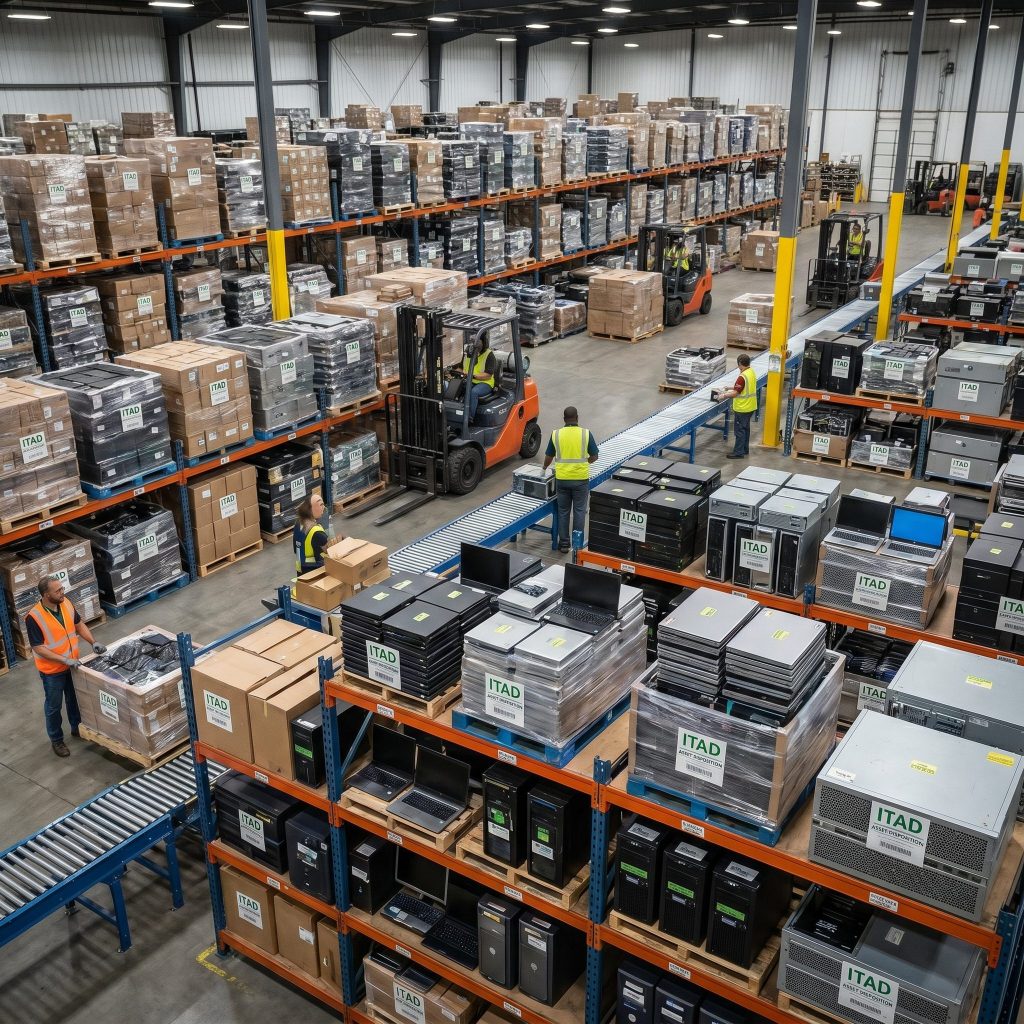
How can SureDispose help you?
Most businesses come to us with the same problem. They know they need to retire old equipment, they know customer and employee data is involved, and they know the wrong move could mean a regulatory violation, a lawsuit, or a breach notification they never want to send. What they don’t know is who to trust to handle it. That’s where we come in. SureDispose is an independent advisory platform, which means we don’t perform IT asset disposition services ourselves. We have no equipment to sell you, no warehouse to fill, and no quota to hit. What we do is sit on your side of the table and help you figure out exactly what your compliance requirements look like before you sign a contract with anyone.
Our assessment walks you through the regulations that apply to your business, whether that is CCPA, state privacy laws, PCI DSS, SOX, GDPR, or a combination of all of them. We map out the documentation you’ll need to stay audit ready and the specific questions you should be asking any ITAD provider before you hand over a single device. From there, we connect you with vetted, certified ITAD partners who hold the credentials your industry actually requires, things like R2v3, NAID AAA, ISO 27001, and ISO 14001. Think of us as the trusted first step before the service provider. The assessment that makes sure you know what you need before you commit to who provides it. Because the worst time to discover a compliance gap is after your old laptops are already on a truck and outside your control.
The step before the vendor
How SureDispose works
Three steps to go from uncertainty to a clear, documented action plan.
Assess your compliance exposure
Answer a few questions about your industry, data types, and current practices. Get a clear picture of where you stand.
Understand your regulatory requirements
See exactly which regulations apply to your organization and what they require for IT asset disposition.
Get matched with certified providers
Connect with vetted, certified ITAD providers who meet your specific industry requirements. No obligation.
Ready to assess your ITAD readiness?
Free. Independent. Takes about 5 minutes. No obligation.
Start the AssessmentBusiness articles

Business
I Own a Small Business. Why Do I Need to Think About ITAD Services?
You bought a few laptops a few years ago. Maybe a couple of desktops, an old server, some phones for the team, and a printer that’s seen better days. Now…
Read article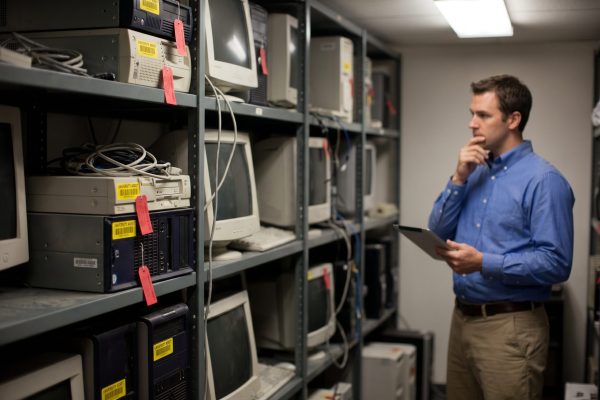
Business
ITAD Regulations 2026: What Every Business Needs to Know About the New Compliance Landscape
If your IT asset disposition program looked solid in 2024, that does not mean it looks solid now. The ITAD regulations 2026 brings to the table represent the biggest shift…
Read article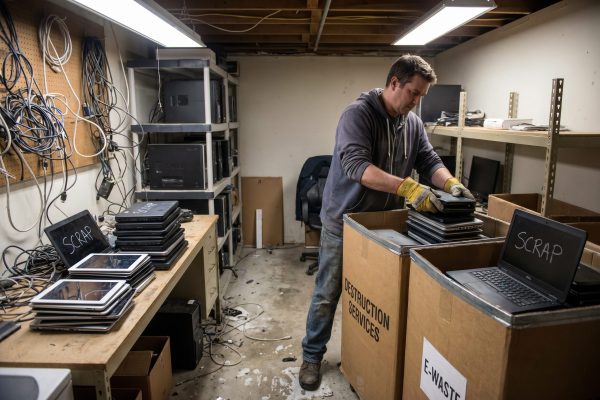
Business
Windows 10 ITAD: Why Your Retired Fleet Is Losing Value Every Month It Sits in Storage
Microsoft ended free support for Windows 10 on October 14, 2025. That date triggered the largest enterprise hardware refresh wave in a decade. By some estimates, 240 million PCs worldwide…
Read article
Business
ITAD Chain of Custody: Why Most Companies Cannot Trace a Single Serial Number
Here is a test that exposes more ITAD programs than any audit ever will. Pick a serial number from a device your company retired in the last 12 months. Any…
Read article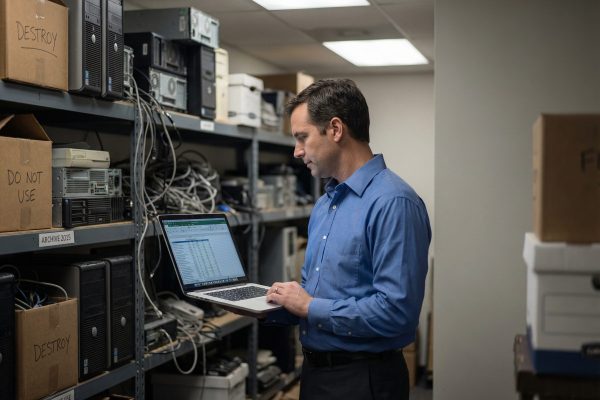
Business
The AI Server Decommissioning Wave Is Here. Is Your ITAD Program Ready?
Your data center team just got the memo. The racks of GPU servers you stood up eighteen months ago are already on the refresh list, and the ones coming in…
Read articleFrequently Asked Questions
Everything you need to know about IT asset disposition and how SureDispose can help.
Do you have more questions?
Have more questions? We're here to help with answers, guidance, and clarity for your ITAD needs.
Contact UsThis includes data destruction, asset tracking, certified recycling, and ensuring compliance with environmental and data privacy regulations
No. SureDispose is an independent advisory platform. We assess your compliance exposure, evaluate your readiness, and connect you with vetted, certified ITAD providers that match your specific needs. We never perform disposition services ourselves.